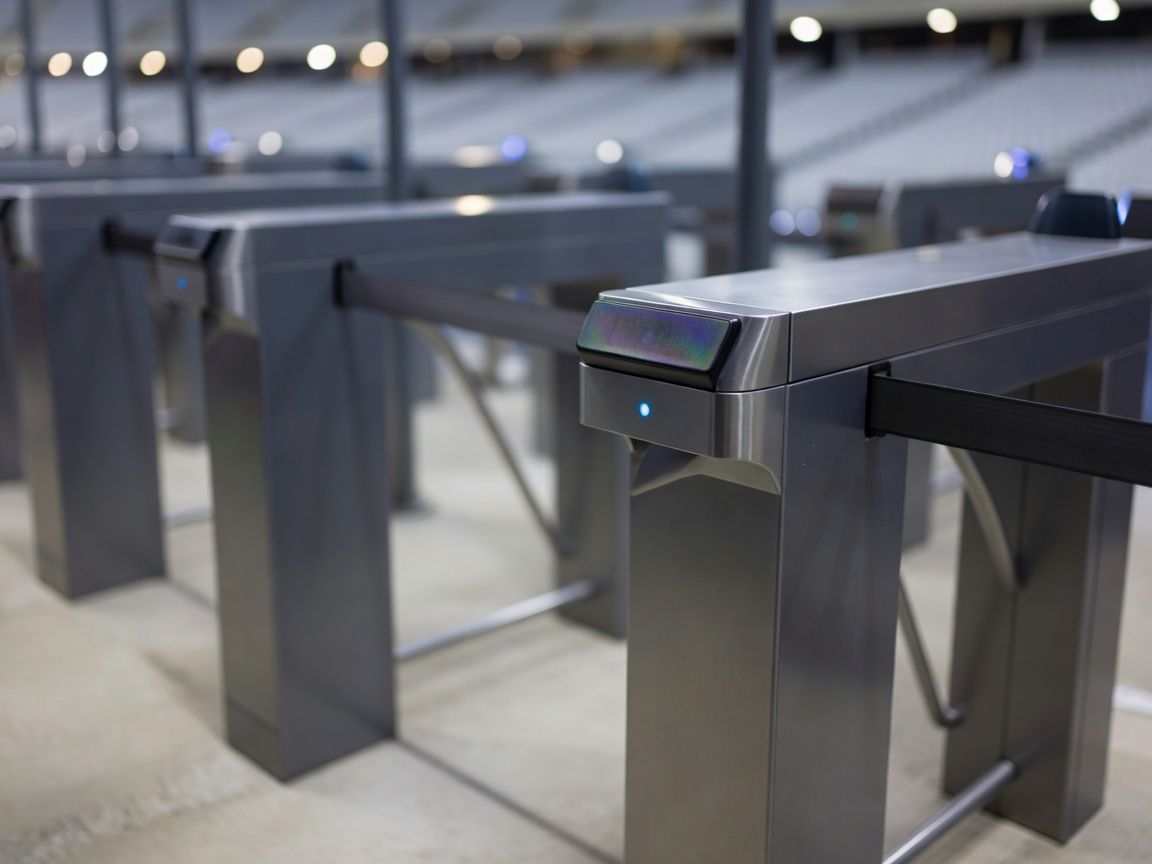
Start outside the measurement boundary
For a venue operator, an arrival is not a single event. A supporter may leave a station, reach a perimeter queue, complete a search and pass an admission point several minutes later. Each stage has a different receiving space and a different possible delay. An AI-assisted system is useful only when its observation boundary is explicit: which line, which direction and which period does the number represent?
Transport disruption can compress arrivals into a shorter period even when total attendance is unchanged. Rain can encourage people to wait under cover before moving together. A late gate opening can create a queue that persists after throughput improves. These are operational explanations, not patterns that should be inferred automatically from a rising count alone.
Separate transactions from people
Ticketing records, turnstile rotations and video line crossings are related signals, but they are not interchangeable. A rejected scan may generate a transaction without admission. A staff entrance may sit outside the public ticketing system. Re-entry rules may mean that one person crosses a boundary more than once. Before combining sources, document exactly what each one records and which populations it excludes.
Video counting commonly detects people in successive frames and estimates crossings over a virtual line. Shadows, umbrellas, closely spaced groups and partial views can produce missed or duplicated detections. A camera positioned for general security may not provide the angle needed for reliable counting. A credible commissioning exercise checks performance under the expected range of light, weather and crowd conditions rather than relying on a single demonstration.
Read queue change alongside throughput
A queue can lengthen while a gate processes people at a steady rate. That simply means arrivals are exceeding departures from the queue. Conversely, a shorter visible queue may reflect people spreading into an unobserved area rather than a genuine improvement. Queue length, approximate waiting time and the condition of the approach route add context that a gate total cannot provide.
A simple arrival-versus-admission comparison can indicate accumulation, but only if the boundaries are compatible. If people can leave the queue, change gates or join between observation lines, subtraction becomes an incomplete balance. Operators should see the missing routes and the age of the latest observation, not just a smooth curve that implies more certainty than the measurement supports.
Follow the receiving space
Increasing admission throughput is not automatically the right response to a growing external queue. The space beyond the gate may include a narrow lobby, a stair or a busy concourse junction. Moving people faster across one boundary can transfer pressure into another area. A useful arrival view therefore includes the state of the receiving space and a practical means of confirming conditions on the ground.
Accessible entrances deserve specific attention. Different routes, search arrangements or assistance needs can create experiences that a venue-wide average conceals. Do not interpret slower movement as an operational failure without context. The relevant question is whether the planned arrangement is working for the people using it, including those who cannot easily change routes or stand for long periods.
Validate locally and preserve context
Manual sample counts can help assess whether automated observations remain useful, provided the sample itself is carefully defined. Record the observation position, period, inclusion rules and any obstruction. Compare periods with different conditions rather than selecting only the clearest footage. A model that performs adequately at a quiet gate may behave differently when groups arrive shoulder to shoulder.
The Sports Grounds Safety Authority’s Guide to Safety at Sports Grounds, commonly called the Green Guide, provides a broader safety-management context. It does not turn a computer-vision count into an authorised capacity or an instruction to open a route. Venue-specific plans, competent staff and the applicable certification arrangements remain central.
Keep arrival analysis proportionate
Arrival analysis should begin with an operational question, such as whether a particular approach is accumulating people. It need not begin with identifying individuals. Aggregate outputs, restricted access and short, justified retention can reduce data exposure, although the underlying camera processing may still involve personal data. In the United Kingdom, the Information Commissioner’s Office provides guidance relevant to surveillance and data protection.
For event planners and supporters, the important distinction is simple: a forecast describes a possible arrival pattern; an observation describes what a system could measure; an operational decision considers both alongside local knowledge. None is a safety guarantee. This publication explains those relationships and does not receive gate feeds, monitor queues or issue live venue instructions.